Lucky App
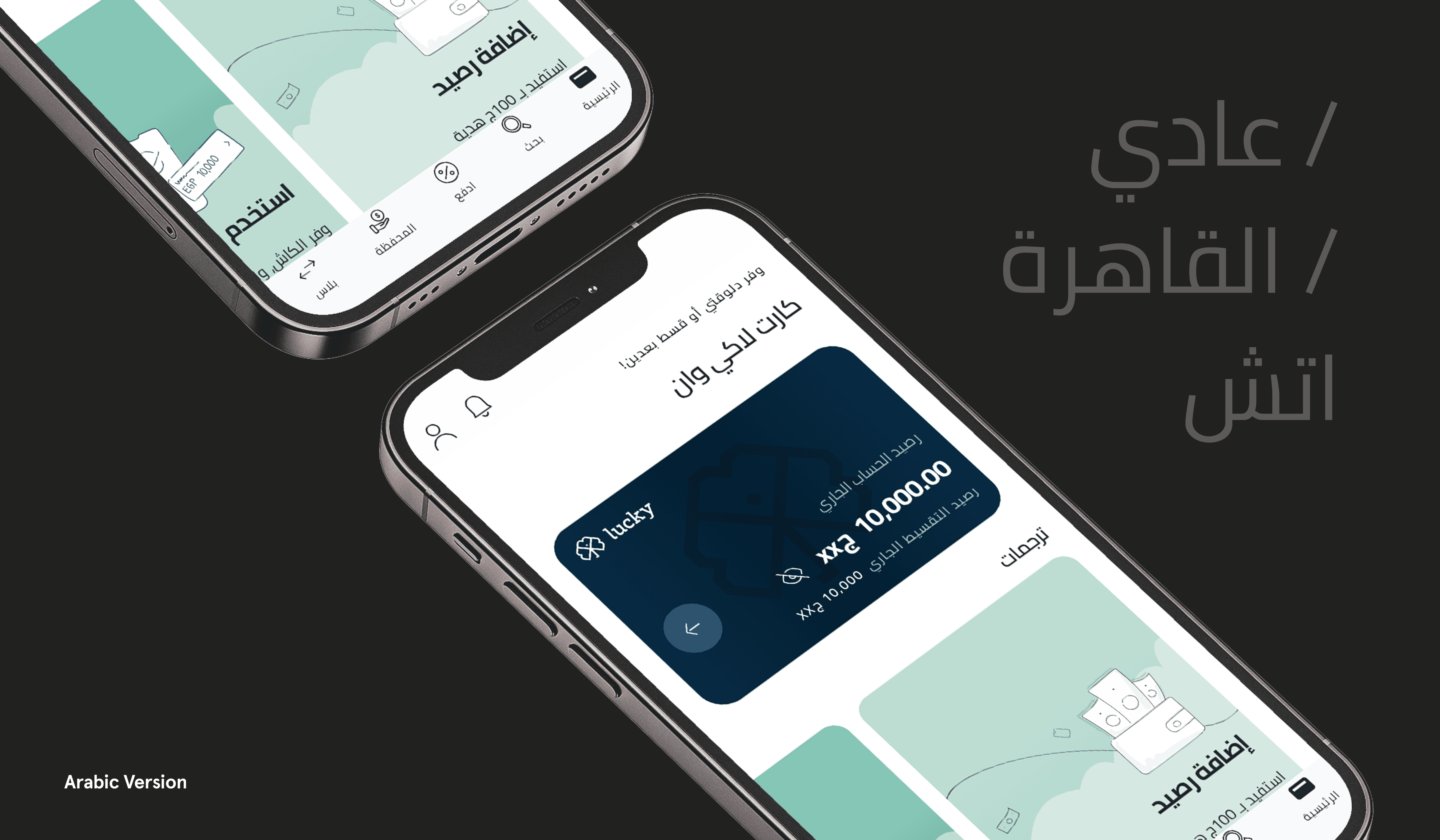
Learn to talk in two languages
Design System
Fintech
Company
Lucky App
Year
2022
Role
Product Design Lead
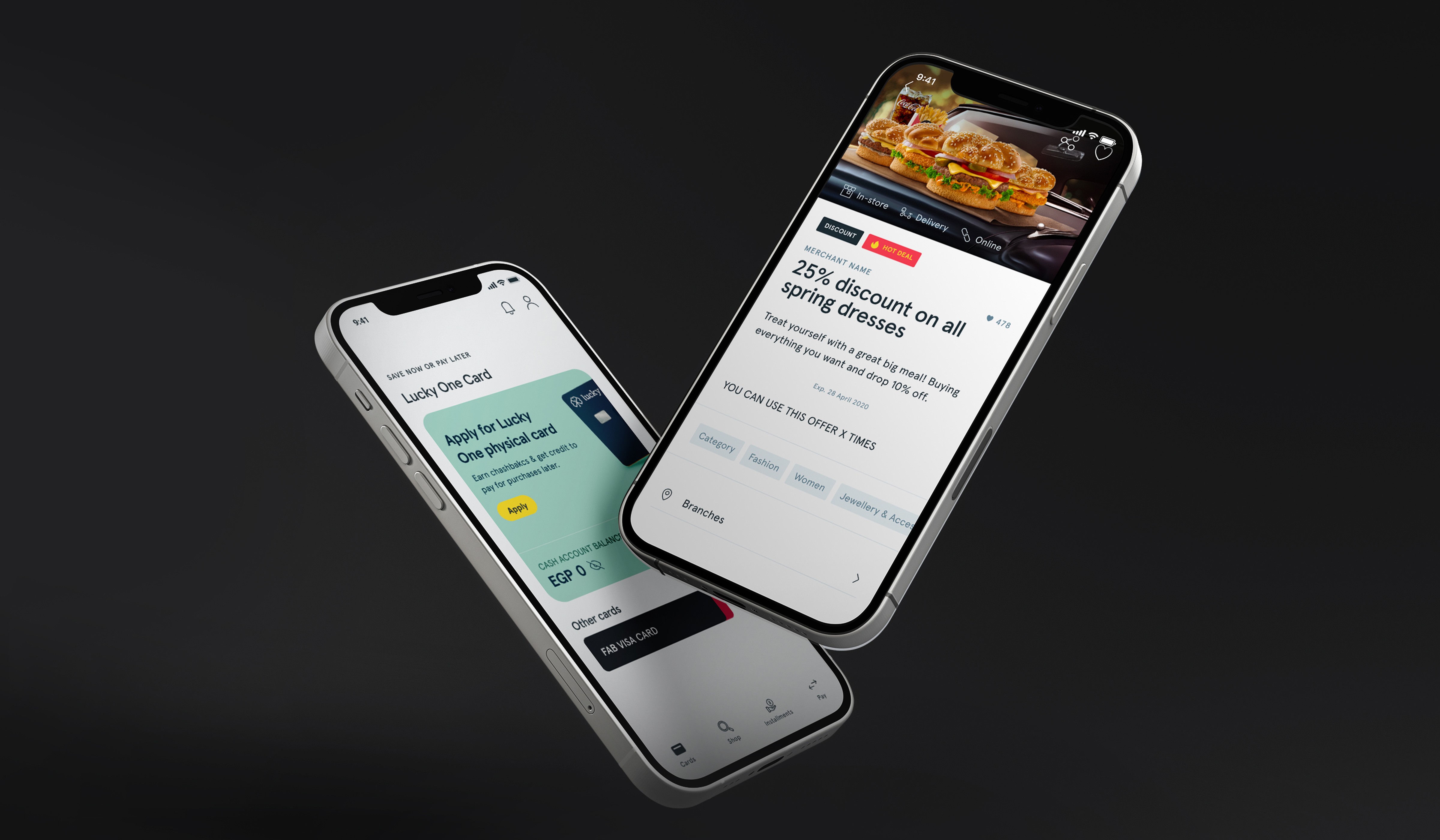
Lucky was one of Egypt’s leading fintech platforms, offering users personalised access to discounts, cashback, and promotions across thousands of local stores. As the app grew in popularity, its ecosystem became more complex—new features, markets, and partnerships emerged quickly. But with speed came the need for structure.
In 2022, I joined to lead the evolution of the design system—helping transform Lucky into a scalable, cohesive product that could maintain speed while offering a seamless, localised experience. "Learning in Two Languages" was more than just a metaphor; it reflected how we built a bridge between design and development, strategy and execution, English and Arabic.
Goals
Business: Strengthen Lucky’s position as a trusted savings platform in Middle East and enable faster go-to-market for new services.
Product: Build a scalable foundation to support feature velocity, consistency, and quality.
User: Create a unified experience that feels local, intuitive, and trustworthy—across different languages and user journeys.
Key Metrics
System Adoption: Track usage of design tokens and components across all product squads.
Design-Dev Efficiency: Reduce implementation time and improve consistency between design and code.
Localization Performance: Ensure seamless support for both Arabic (RTL) and English (LTR) without duplicating effort.
Release Speed: Monitor reduction in time-to-market for campaigns, features, and updates.
Concepts
Trust & Clarity: A fintech app must always feel safe, transparent, and easy to use—even when users navigate offers, stores, or transactions.
Local Relevance: Designs had to resonate with Egyptian users—through visuals, copy, and layout that felt familiar and culturally appropriate.
Dual Language Fluidity: Supporting Arabic and English equally meant creating a system that worked for right-to-left and left-to-right logic, structure, and typography.
My Approach
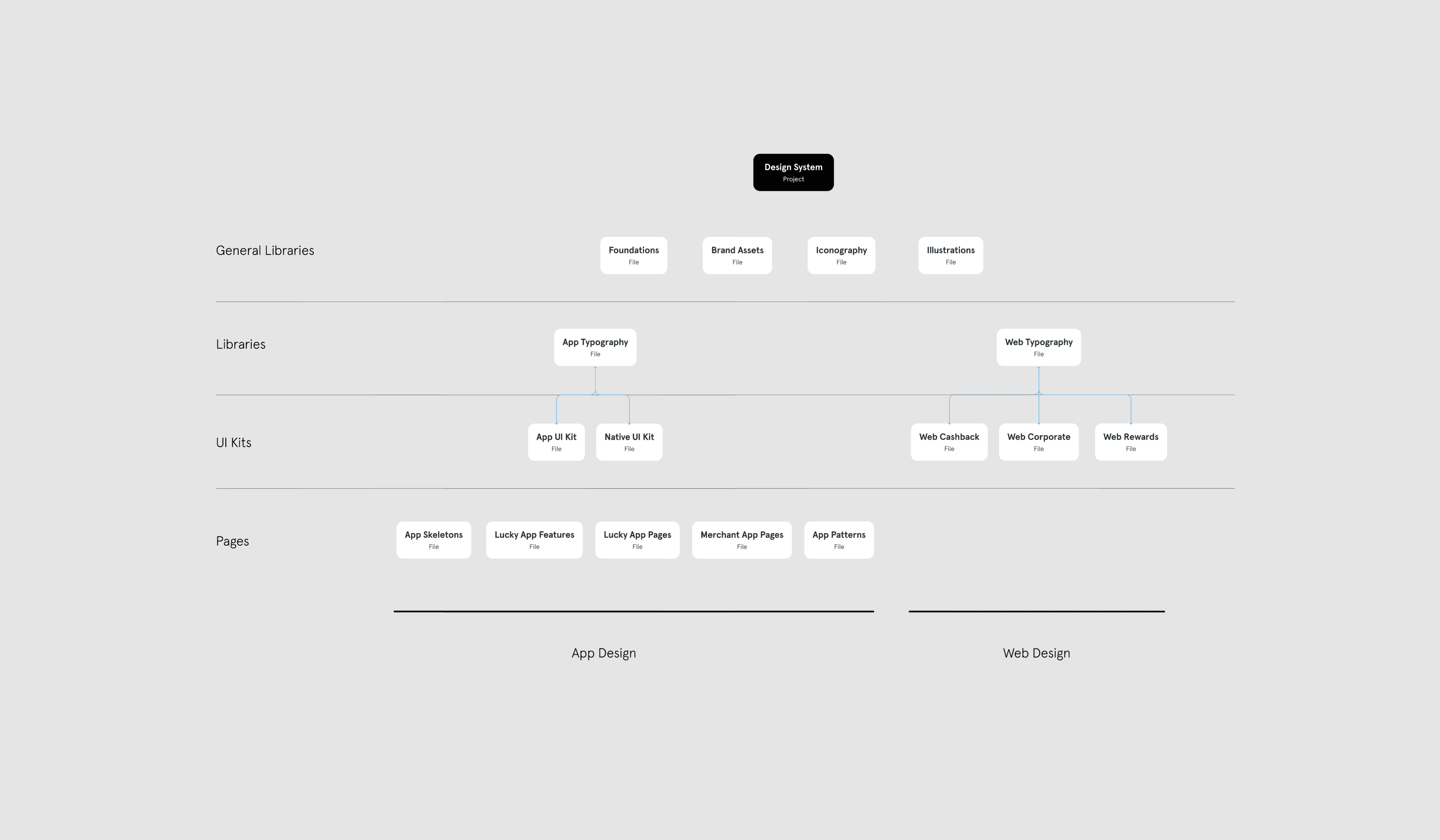
Design System Overhaul: I rebuilt Lucky’s design system into a fully tokenized, RTL/LTR-adaptive architecture using Figma Variables and code-ready tokens.
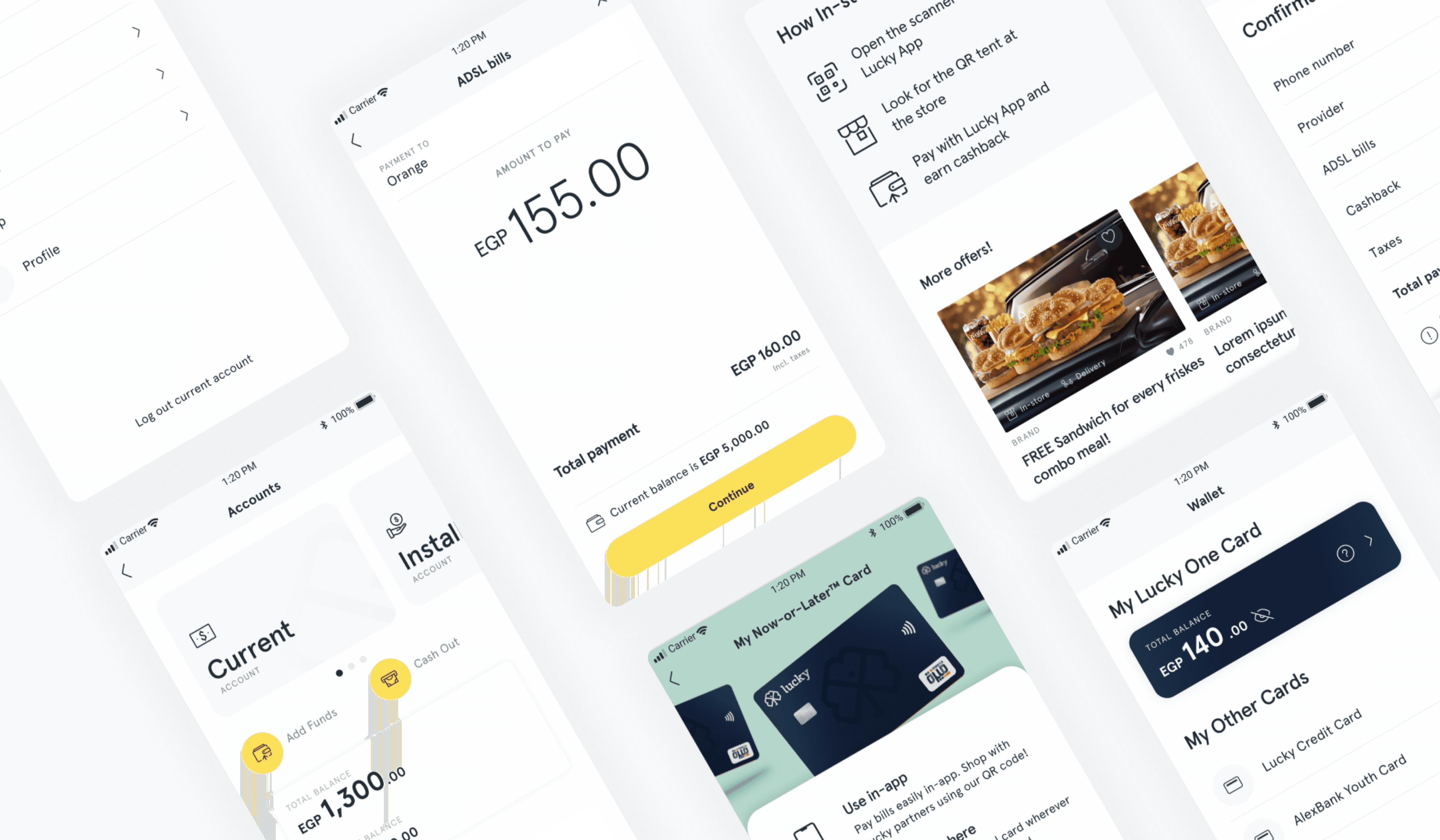
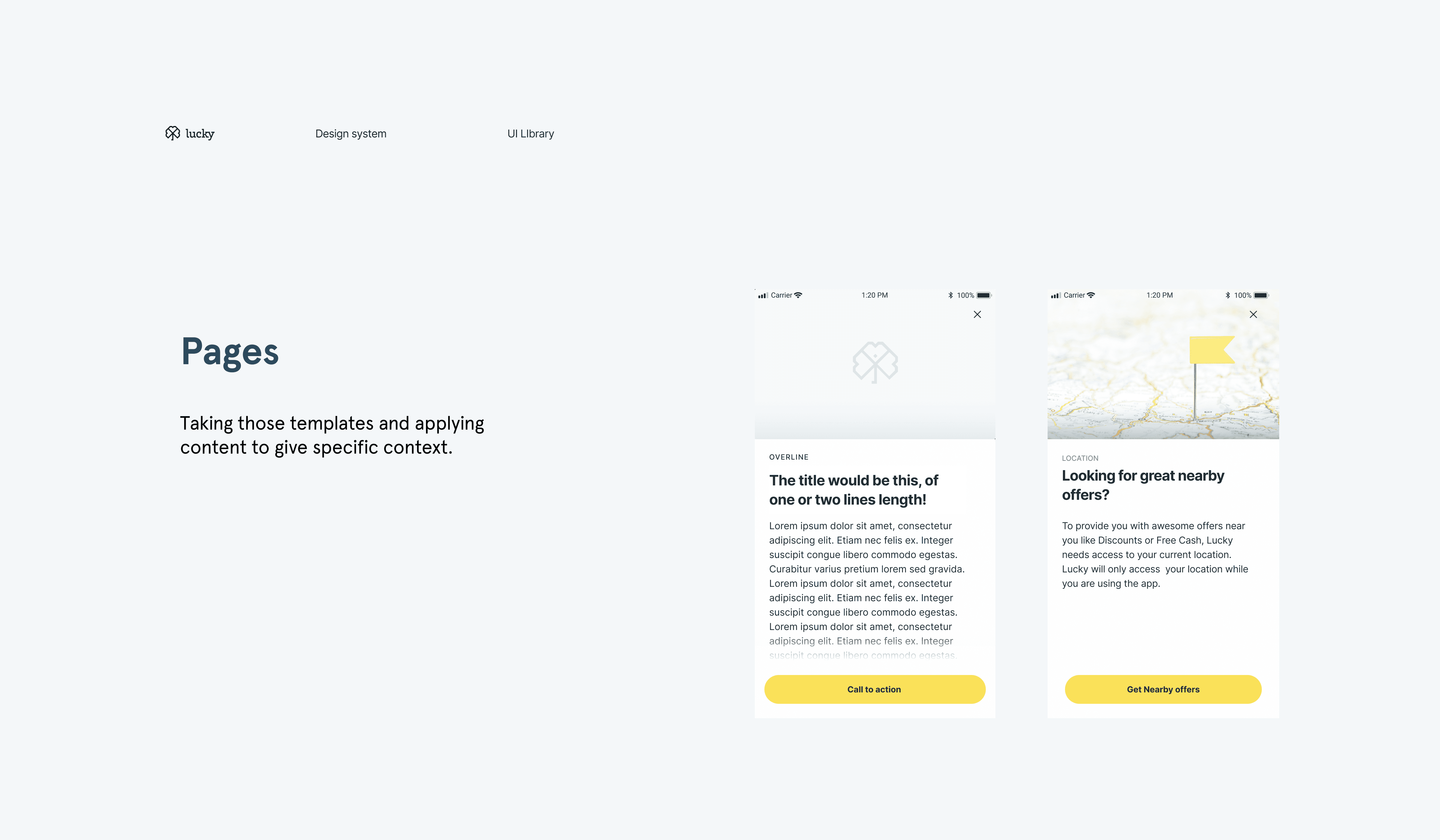
Modular UI Components: We created reusable components that could adapt to promotional changes, dynamic content, and partner-specific styling—without rework.
Governance & Documentation: Introduced clear guidelines, component specs, and a shared language between designers and developers to improve cross-team alignment.
Typography Strategy: Selected font pairs that supported both Arabic and Latin scripts with consistent tone and legibility across devices.